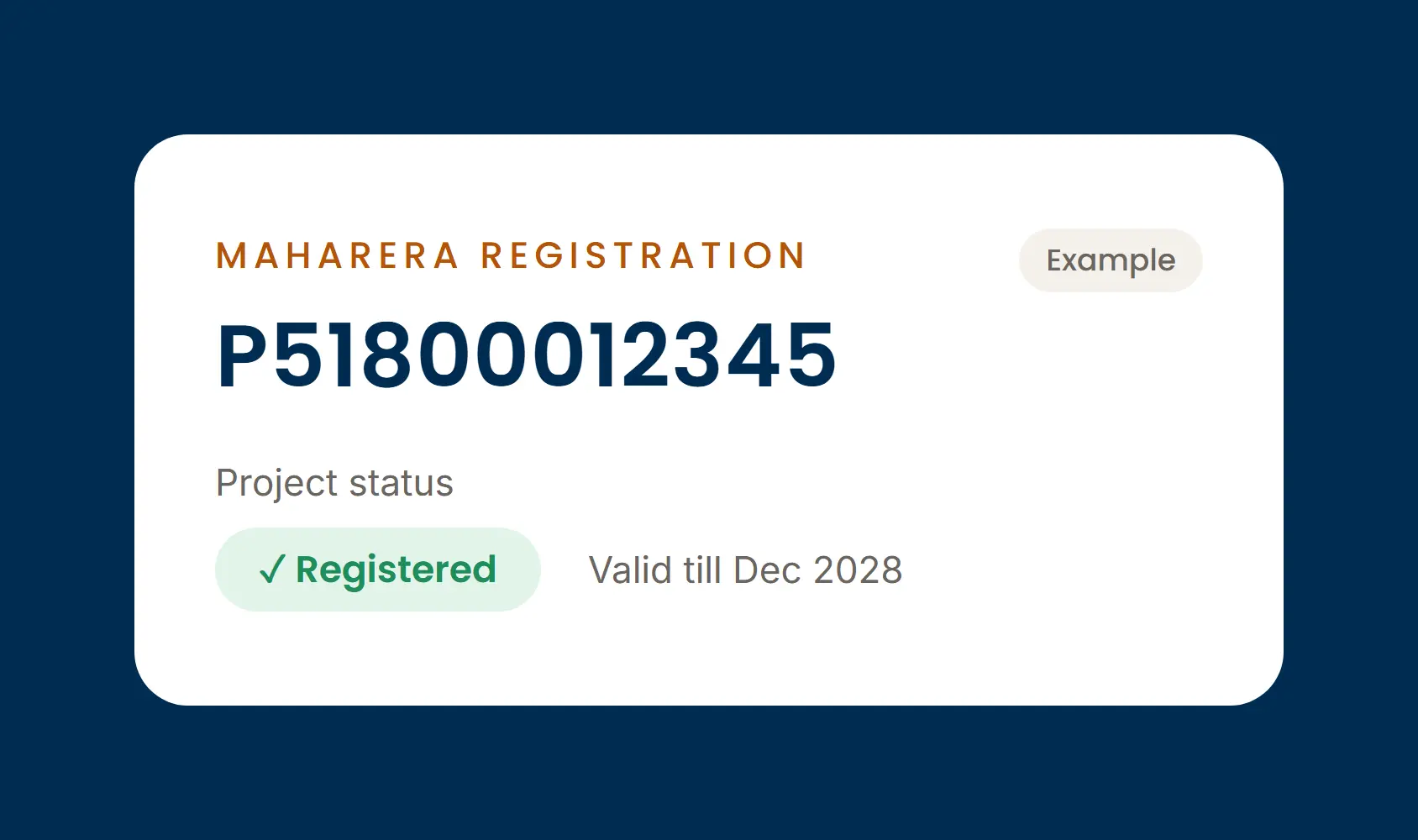
A MahaRERA registration number is the quickest way to check that a project is legal to sell - and that what you are being told matches what the builder filed. Here is how to check it.
Under the Real Estate (Regulation and Development) Act, 2016, most new projects must be registered with the state’s RERA authority before the builder can advertise or sell a single home. In Maharashtra that authority is MahaRERA.
1. Find the registration number
It should be printed on every advertisement, brochure and project website, together with a QR code that links to the MahaRERA record. On PropertyMitras you will find both in the “RERA & disclosures” section of each project page. If a builder cannot show you a number, treat that as a warning sign.
2. Look it up on the MahaRERA website
Go to the official MahaRERA website (maharera.maharashtra.gov.in) and search the registered projects by registration number, project name or promoter name. Scanning the QR code on an advertisement takes you to the same record.
3. Check that the basics match
- Promoter: the company on the record should be the builder you are dealing with.
- Location: the address and survey numbers should match the site you visited.
- Completion date: note the proposed completion date the builder filed – and whether it has been extended.
- Validity: the registration should be current.
4. Read the documents
The record holds the approved plans, the commencement certificate, the title documents and the builder’s periodic progress updates. Compare the approved plans with the floor plans in the brochure, and check how far construction has actually progressed.
5. Look for complaints and extensions
Complaints filed by other buyers and any extensions of the completion date tell you a lot about how a project is going. A few extensions are not unusual; a long history of them is worth a conversation with the builder before you book.
Prefer a second pair of eyes? Our team checks the RERA record, title and sale agreement with you before you pay anything, at no cost to buyers.
This is general information, not legal advice. For your specific situation, talk to a real-estate lawyer – our legal consultation is free for buyers.